
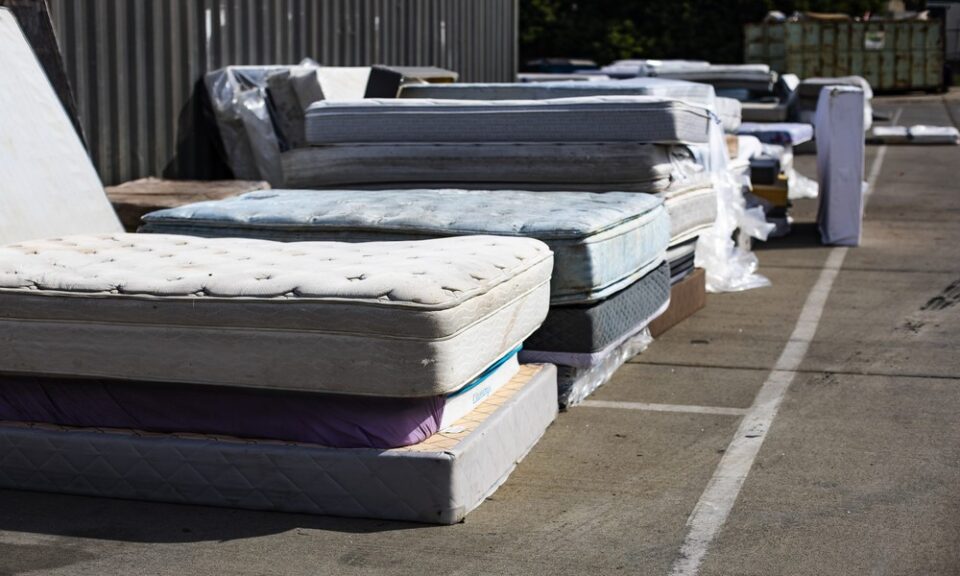
Mattresses have a dirty secret. While we sleep peacefully, millions of unwanted mattresses end up buried in landfills every year, lingering for decades before decomposing. Yet, beyond the piles of springs and foam lies a story of transformation: the surprising journey of mattress components after recycling.
Mattress Recycling: Busting the Biggest Myths
Some ideas about mattress recycling just refuse to die. Here’s why they don’t hold up.
Myth 1: Mattresses Can’t Be Recycled Efficiently
The sheer bulk and mishmash of materials make recycling sound like a logistical nightmare. In reality, specialized facilities can process thousands of mattresses per day, separating materials using both skilled hands and modern machinery.
Myth 2: Recycling Mattresses Has No Real Environmental Impact
Each recycled mattress frees up 23 cubic feet of landfill space. Multiply that by millions, and the environmental impact is massive. Over 4 million mattresses have already been recycled, reducing landfill overflow and pollution.
Myth 3: All Mattress Components Are Simply Landfilled After Collection
Sorting is meticulous. Steel, foam, wood, and fabric are dismantled and sent to be reborn as new products, not simply carted off to rot in another landfill.
Myth 4: Recycling Mattresses Is Too Expensive and Not Worth It
While there is an upfront cost, the market for repurposed materials (like steel and foam) offsets much of the expense. Some cities even report net savings thanks to reduced disposal fees.
Myth 5: Mattress Recycling Produces Low-Quality Recycled Materials
Industrial processes clean and refine foam and steel, allowing them to re-enter the supply chain as materials for insulation, furniture, and even new mattresses.
Myth 6: Only Springs and Foam Are Salvaged from Old Mattresses
Wooden frames and fabrics are valuable, too. All major components can find a new life, provided the recycling facility is equipped for proper sorting.
Myth 7: Mattress Recycling Is a Local Problem, Not a Global Concern
From Toronto to Tokyo, cities worldwide face mounting mattress waste. The push for sustainable solutions is a global trend, not a regional quirk.
Breaking Down the Mattress: What Happens After Recycling?
Once a mattress arrives at a recycling facility, the real magic begins.
Separating Materials: Foam, Springs, Fabric, and Wood
Mattresses are cut open and stripped down. Trained workers sort materials into separate streams, ensuring each finds its most effective reuse.
Foam Repurposing: From Cushioning to Carpet Underlay
The foam padding that once cushioned sleepers gets shredded, cleaned, and compressed. Its next act? Providing soft support in carpet underlay, furniture padding, or automotive insulation.
Metal Springs: Transforming Steel for New Industrial Uses
Steel coils are extracted, then melted and purified. The resulting steel finds its way into construction materials, appliances, and new consumer products.
Fabric and Fibers: Creating Insulation and Upholstery Materials
Cover fabrics and ticking are deconstructed into fibers, which can be woven into industrial filters, soundproofing insulation, or even used in new upholstery.
Wood Components: Recycled for Furniture and Composite Boards
The wood from box springs is stripped of staples and nails, then chipped down for mulch, animal bedding, or pressed into particleboard for new furniture.
The Environmental Benefits of Mattress Recycling
Why does all this matter?
Reducing Landfill Waste and Toxic Decomposition
Mattresses are bulky and slow to break down, taking up valuable landfill space and leaching chemicals as they decompose. Recycling addresses both problems head-on.
Saving Energy and Raw Materials Through Reuse
Repurposing steel and foam saves the energy required to mine new ore or produce virgin materials. Every recycled mattress means less extraction from the earth.
Cutting Greenhouse Gas Emissions by Avoiding Mattress Incineration
Burning discarded mattresses releases harmful gases. Recycling keeps these pollutants out of the atmosphere, supporting carbon reduction goals.
How Innovative Companies are Leading Mattress Recycling
Canada boasts industry leaders who don’t just talk sustainability, they make it work.
Case Study: Recyc-Matelas and Their Sustainable Approach
A standout example, Recyc-Matelas, has recycled over 4 million mattresses to date, proving that environmental responsibility can be practical and scalable. Their sorting, cleaning, and repurposing strategies have set new benchmarks for what’s possible.
Technologies Making Mattress Recycling More Effective
Automation, conveyor systems, and advanced sorting technologies allow facilities to process more mattresses, more safely, and more quickly than ever.
Community and Government Roles in Mattress Recycling Success
Subsidies, convenience at drop-off points, and public awareness campaigns help drive participation and keep recyclable materials out of landfill.
What Consumers Can Do to Support Mattress Recycling
Change starts at home.
Choosing Mattresses Made with Recyclable Materials
Seek products labeled as recyclable or made from single-material layers for easier breakdown.
Proper Disposal and Drop-off Points
Research your local recycling programs and follow proper drop-off or scheduled pickup guidelines to ensure mattresses enter the correct recycling stream.
Supporting Businesses That Prioritize Mattress Recycling
Choose retailers and manufacturers that partner with reputable recyclers and publicly commit to environmental stewardship.
The Future of Mattress Recycling: Trends and Innovations
The story is still unfolding.
Advances in Material Recovery Techniques
From chemical recycling to robotics, new tools are expanding the types of materials that can be salvaged and the efficiency of their recovery.
Circular Economy Models in the Mattress Industry
Manufacturers are starting to design products with their second life in mind, supporting a cycle of reuse that could redefine the industry.
Potential New Uses for Recycled Mattress Components
Innovators are finding surprising homes for repurposed materials, from playground surfaces to art installations.
Mattress recycling is more than a way to keep local dumps from overflowing. It’s a global movement, quietly reshaping how we treat our waste, and our planet.
