
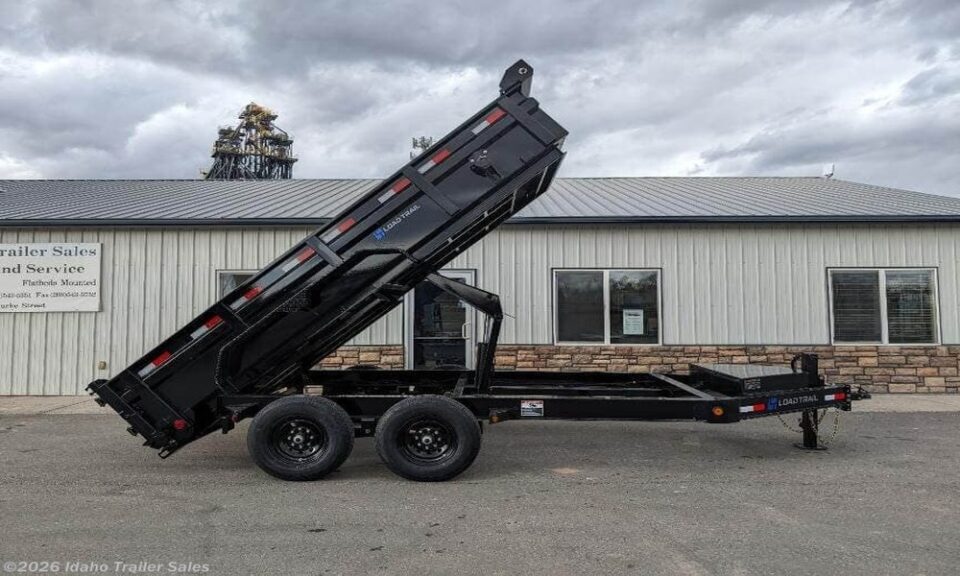
A dump trailer is one of those purchases that either pays for itself within a season or sits in the yard half-utilized because the wrong size, the wrong floor thickness, or the wrong hydraulic setup got picked off a spec sheet. Customers who walk into Grizzly Trailer Sales in Rupert or Montpelier with a clear sense of their typical loads, their tow vehicle, and their registration plans usually leave with a trailer that handles years of work without complaint. The ones who guess based on price alone tend to come back twelve months later asking about heavier replacements. Magic Valley conditions, from canal-side topsoil hauls to demolition cleanup in town, demand specific answers to a handful of decisions.
Start With What You’ll Actually Be Hauling
The single most useful exercise before shopping is writing down the three or four loads you’ll move most often, with rough weights. Material density determines everything downstream.
A cubic yard of dry topsoil weighs roughly 2,200 pounds. Wet topsoil pushes 2,800. Pit-run gravel runs 2,700 to 3,000 per yard. River rock, the kind you pull out of a Snake River bed for landscaping work, climbs to 3,000 plus. Concrete debris, the heaviest material most contractors handle, sits between 3,500 and 4,000 pounds per cubic yard depending on rebar content.
Run those numbers against trailer capacity and the picture clarifies fast. A 14,000-pound GVWR trailer with an empty weight around 4,200 pounds carries about 9,800 pounds of payload. That’s three cubic yards of river rock. Not five, not six. The bed will fit more volume, but the axles, frame, and tires won’t carry it legally or safely.
GVWR Classes and What Each One Actually Handles
The three most common classes in Idaho work fleets break down predictably.
A 7,000-pound GVWR dump trailer suits residential landscapers, small acreage owners, and homeowners hauling debris from cleanup projects. Payload sits around 4,500 pounds, which covers a yard of gravel, a load of yard waste, or a partial load of fill. These trailers typically run 5×10 or 6×10 with single-axle setups.
A 10,000-pound GVWR trailer is the workhorse class for most contractors and ranch operations. Tandem axles, 12 to 14 feet of bed length, and around 6,500 pounds of payload. Two yards of gravel, a small skid steer, or a load of demo debris fit comfortably without putting the trailer at its limit on every trip.
A 14,000-pound GVWR trailer is where serious commercial work happens. Heavier axles, thicker frames, longer beds at 14 to 16 feet, and payload approaching 10,000 pounds. This is the class for hauling river rock, concrete, full pallets of pavers, or compact equipment with attachments. Tow vehicle requirements get serious here. A 3/4-ton truck handles a 10K loaded reasonably; a fully loaded 14K really wants a 1-ton with the right hitch rating.
Scissor, Telescopic, or Dual Ram
The hydraulic system determines how the bed lifts, how high it tilts, and how much weight it can dump cleanly.
Scissor lifts use a single hydraulic cylinder mounted under the bed with a folding scissor mechanism. They’re the most common setup in 7K and 10K trailers. Reliable, simple to service, lower price point. Dump angles typically reach 45 degrees, which clears most loose materials but can hang up on sticky clay or wet topsoil.
Telescopic cylinders mount at the front of the bed and extend in stages. Higher dump angles, often 50 to 55 degrees, which moves sticky material more reliably. Telescopic setups dominate longer trailers where a scissor mechanism would lose leverage at the back of the bed. Service complexity is slightly higher, and the cylinder itself sits more exposed.
Dual ram systems use two cylinders mounted at the front corners of the bed. Heavier capacity, more stable lifts under uneven loads, and steadier behavior when the trailer is parked on a slight slope. Common on 14K and larger trailers, especially those built for rock and concrete.
For someone hauling mostly gravel, fill, and yard debris, a quality scissor lift on a 10K is plenty. For demolition, river rock, or anything that compacts and sticks, telescopic or dual ram earns its keep.
Floor Thickness and Sidewall Height
The spec sheet line most buyers skip past matters more than almost anything else for trailer longevity. Standard dump trailer floors run 10-gauge steel, which holds up fine for soil, sand, and brush. Drop a load of broken concrete or river rock from a skid steer bucket repeatedly onto 10-gauge and dents start showing within months.
Heavy-duty floors come in 7-gauge or 1/4-inch plate. The price bump is real, often $400 to $800, and the trailer life extension is dramatic for anyone working in demo, rock, or rebar-laden material. Sidewall heights of 24, 36, and 48 inches change cubic yard capacity meaningfully. A 14-foot bed with 24-inch sides holds about 4 yards level full; the same bed with 48-inch sides holds 7 yards, though weight will limit you well before volume does on dense loads.
Farm Use, Commercial Registration, and Idaho Plates
How the trailer gets registered with the Idaho Transportation Department affects cost, weight limits, and what you can legally do with it. Farm-plated trailers carry lower registration fees and serve operations hauling agricultural products on and around the home operation, with mileage and use restrictions defined under Idaho Code Title 49. Commercial registration costs more but allows full commercial hauling, including jobs across county or state lines for hire.
Brake requirements kick in at 1,500 pounds GVWR for trailers in Idaho, and any dump trailer in the 7K-and-above range will come with electric brakes on at least one axle, often both. The Idaho DMV and ITD websites publish current registration tables and weight fee schedules for verification. Customers crossing into Utah, Nevada, Oregon, or Wyoming should also check reciprocity rules, especially for commercial use.
Matching the Trailer to the Tow Vehicle
A dump trailer rated at 14,000 pounds GVWR loaded to capacity needs a truck rated to pull it. That means checking tow rating, payload capacity (which is what gets eaten by tongue weight), hitch class, and brake controller compatibility. Tongue weight on a loaded dump trailer typically runs 10 to 15 percent of gross weight, which on a fully loaded 14K is 1,400 to 2,100 pounds sitting on the truck’s rear axle. A half-ton truck simply cannot carry that.
Picking the right dump trailer comes down to honest math on weight, distance, frequency, and load type rather than brand loyalty or sticker price. The team at Grizzly Trailer Sales has helped contractors, ranchers, and homeowners across Minidoka and Bear Lake counties match trailers to actual jobs for years. Stop by the Rupert location on West 100 South or the Montpelier yard on North 4th Street, bring the specs of your truck and a sketch of your typical loads, and walk out with a trailer built to work as hard as you do.
