
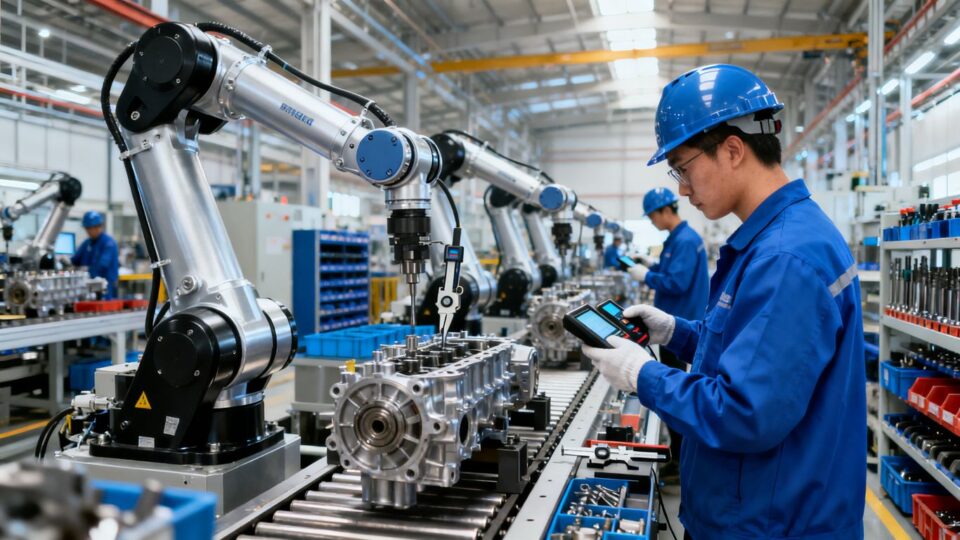
Manufacturers often operate under strict standards regarding the safety of the goods they place into commerce. Understanding the framework of strict liability requires a thorough assessment of how legal systems handle product-related harm. This approach ensures that producers remain accountable for the safety of their output, regardless of individual procedural lapses.
Legal definition of strict liability in product manufacturing
Strict liability functions as a doctrine that imposes accountability on a manufacturer if their product is found to be defective, even without evidence of negligence or failure to use standard care during production. This legal standard is often explored by professional legal scholars to help define the scope of corporate responsibility when a consumer sustains damages. By removing the need to prove a specific breach of duty, the court focuses entirely on the condition of the physical item at the time it left the producer’s possession.
The difference between negligence and strict liability claims
Negligence requires a plaintiff to demonstrate that a manufacturer failed to exercise reasonable care, a burden that can be difficult to satisfy in fast-paced production environments. In contrast, strict liability bypasses the behavioral evaluation entirely. This distinction is critical because it forces a focus on the structural integrity of the final goods. Understanding the evolving landscape of law helps practitioners and producers alike navigate the transition between these two theories during litigation.
The rationale behind consumer protection and public policy
Public policy advocates for strict standards because the modern consumer frequently lacks the technical knowledge to identify hidden hazards before a failure occurs. By distributing the risk to the manufacturer, the legal system incentivizes higher safety thresholds during development. This creates a safeguard that ensures businesses internalize the costs of risky production methods rather than passing those burdens onto the injured public.
Types of product defects in strict liability claims
The classification of a defect is the primary driver of any strict liability action. Manufacturers must consider how various points of failure expose them to potential claims throughout the lifecycle of their products. Recognizing these specific categories allows companies to monitor their assembly lines and design cycles more effectively.
Manufacturing defects and assembly errors
A manufacturing defect occurs when a specific product deviates from its intended design specifications during the fabrication process. Even if the overall design is sound, an individual unit might emerge from the factory floor with dangerous flaws due to equipment failure or human oversight. These cases are usually resolved by verifying the production standards applied during the assembly phase.
Design defects in original product specifications
Design defects are inherent in the product before it is ever manufactured, typically stemming from an inadequate engineering phase. When a product is built exactly as designed but still proves unreasonably dangerous for its intended use, the design itself serves as the basis for liability. This requires companies to perform comprehensive assessments before ever reaching the mass production stage.
Failure to warn and marketing defects
Marketing defects involve inadequate instructions or insufficient warnings regarding the potential risks associated with a product. When a manufacturer fails to caution a user about foreseeable dangers or provides improper guidance for safe operation, they may face litigation. This category centers on the communication strategies employed instead of the physical build of the product itself.
Necessary elements for a strict liability claim
For a claim to succeed, the plaintiff must establish a bridge between the product’s condition and the harm suffered. Manufacturers should recognize that these elements are foundational to defending their interests in a court of law. This systematic proof process dictates the flow of discovery and trial proceedings.
Proving the product reached the user in a defective state
The claimant carries the burden of proving that the item was defective at the time it left the control of the manufacturer or seller. This often involves forensic analysis of the product’s condition to rule out post-purchase damage. Establishing this specific timeline ensures the manufacturer is not held responsible for defects introduced during shipping or consumer usage.
Establishing causation between the defect and the injury
Once a defect is established, the plaintiff must prove that this specific issue acted as the actual and proximate cause of their personal injury or property loss. Expert testimony is frequently utilized to demonstrate how the failure directly led to the accident. If the injury occurred due to causes extrinsic to the defect, the manufacturer may successfully argue against liability.
Determining the scope of the dangerous condition
Legal authorities often evaluate whether the product was inherently dangerous beyond what a reasonable consumer would expect. There is a clear threshold of risk that justifies these legal claims. The primary components used to assess the dangerous condition include:
- The frequency and severity of similar past malfunctions
- The availability and feasibility of safer design alternatives
- Total expected longevity under normal usage conditions
- The complexity of the product and its intended user demographic
Establishing these factors helps distinguish between an unavoidable accident and a legitimate failure of the manufacturing process.
Defenses and limitations for manufacturers
Manufacturers are not automatically liable for every incident involving their products; several affirmative defenses exists to balance the scales. These legal protections serve to limit liability when the user’s actions deviate from expected norms or standardized safety protocols. Identifying these factors early is crucial for any personal injury legal firm handling these complex matters.
Alteration of the product after the point of sale
If a consumer modifies or alters a product in a way that creates a new risk, the manufacturer generally avoids responsibility for subsequent failures. These changes effectively break the chain of evidence linking the original manufacturing quality to the harm caused. This defense is essential, especially for industrial equipment that might be serviced by third-party technicians.
Assumption of risk by the end consumer
This defense applies when the plaintiff knowingly and voluntarily assumes a known danger associated with the product. If a user receives clear warnings but chooses to ignore them or continue using the product despite apparent risks, they may be held partially or fully responsible for their outcome. The manufacturer must document these warnings to establish that the consumer had proper notice.
Misuse of the product beyond intended parameters
Liability may be limited when the product is used in a manner that was not reasonably foreseeable or intended by the manufacturer. If a product meant for home use is deployed in an industrial, high-torque environment, the resultant failure falls outside the scope of strict liability claims. Companies often utilize detailed manuals to clearly define these intended usage boundaries.
Statute of limitations and statutes of repose
Legislative bodies establish timelines within which legal actions must be filed after an incident occurs. Statutes of repose go further by setting a fixed deadline after the initial sale, preventing claims once a set number of years have passed. These statutes provide businesses with a sense of finality regarding their exposure to older product models.
The financial and operational impacts of strict liability
Operating in a strict liability environment necessitates high levels of fiscal and administrative preparation. Executives must consider the potential for rapid litigation and the long-term impact on their brand reputation. Balancing safety investment with operational efficiency remains a top concern for modern manufacturers.
Managing product recalls and escalating litigation risks
When a design or manufacturing flaw is identified, a recall is often the most effective way to mitigate further harm and legal exposure. Recalls, however, are costly and require seamless coordination between logistics, communications, and legal teams to prevent escalating litigation risks. Proactive management of these processes is often a deciding factor in overall corporate health.
The role of liability insurance and risk transfer strategies
Liability insurance is a critical tool for protecting companies against the high costs of legal defenses and settlements. Many businesses also employ risk transfer strategies, such as insurance policies that cover multiple stages of the supply chain. This approach ensures that the financial backing exists to handle unforeseen incidents without threatening the stability of the entire organization.
Implementing rigorous quality control standards
Quality control is the first line of defense against strict liability claims. By adhering to international standards, companies can minimize the occurrence of defects that often form the basis of a lawsuit. Consistent testing throughout every stage of development provides a defensible record of the care taken during production.
Understanding the role of supply chain components
Strict liability often extends throughout the entire chain, implicating various parties beyond just the primary manufacturer. Understanding these interconnections is vital for Georgia strict liability laws that apply to the broader distribution network. This ensures all entities understand their specific responsibilities regarding safety.
Component part manufacturer liability
The maker of a specific component may be held liable if that part is found to be defective before it was ever integrated into the larger product. Even if the assembler is not at fault, the supplier of a flawed valve, gear, or electronic chip remains subject to strict liability standards. This holds every link in the chain accountable for their specific contribution to the final assembly.
Shared liability among distributors and retailers
Retailers and wholesalers stand in the chain of commerce and can therefore be named in strict liability lawsuits. While they did not design or build the product, their role as the distributors creates a obligation to manage their inventory responsibly. This necessitates that they only partner with manufacturers who value safety and compliance just as highly as they do.
Indemnification agreements and contractual protections
To balance responsibilities, firms often use indemnification agreements that clarify which partybears the loss in the event of a successful claim. These contracts allow retailers to seek reimbursement from manufacturers who created the defective product. While such an agreement does not eliminate external liability toward the injured party, it provides an essential tool for managing internal business costs and risk allocation.
